
BlueConic
Industry: Enterprise SaaS
Role: Product Design Manager
Tenure: 3 years
Team size: 4
Eighteen months ago, with the CDP market in turmoil, BlueConic appointed a new CEO who issued a stark challenge: adapt to an AI driven future or risk extinction.
The challenge was not just to adopt AI, but to do so in a way that created real customer value rather than superficial features. At the time, there was no shared understanding of what “AI-first” meant in practice. Early efforts across the industry were fragmented, often bolting generative capabilities onto existing workflows without improving outcomes.
As UX leader, I set three priorities: establish a clear, repeatable approach to designing AI powered experiences; translate that approach into features with demonstrable customer value; and amplify my team’s impact by making AI foundational to how we work.
Paradigm change
For the first time since the invention of the computer, generative AI allows users to express goals in their own terms rather than the logic of the systems they operate. UX shifts from designing interfaces users must conform to, to shaping relationships between people and dynamic systems that interpret, reason, and act.
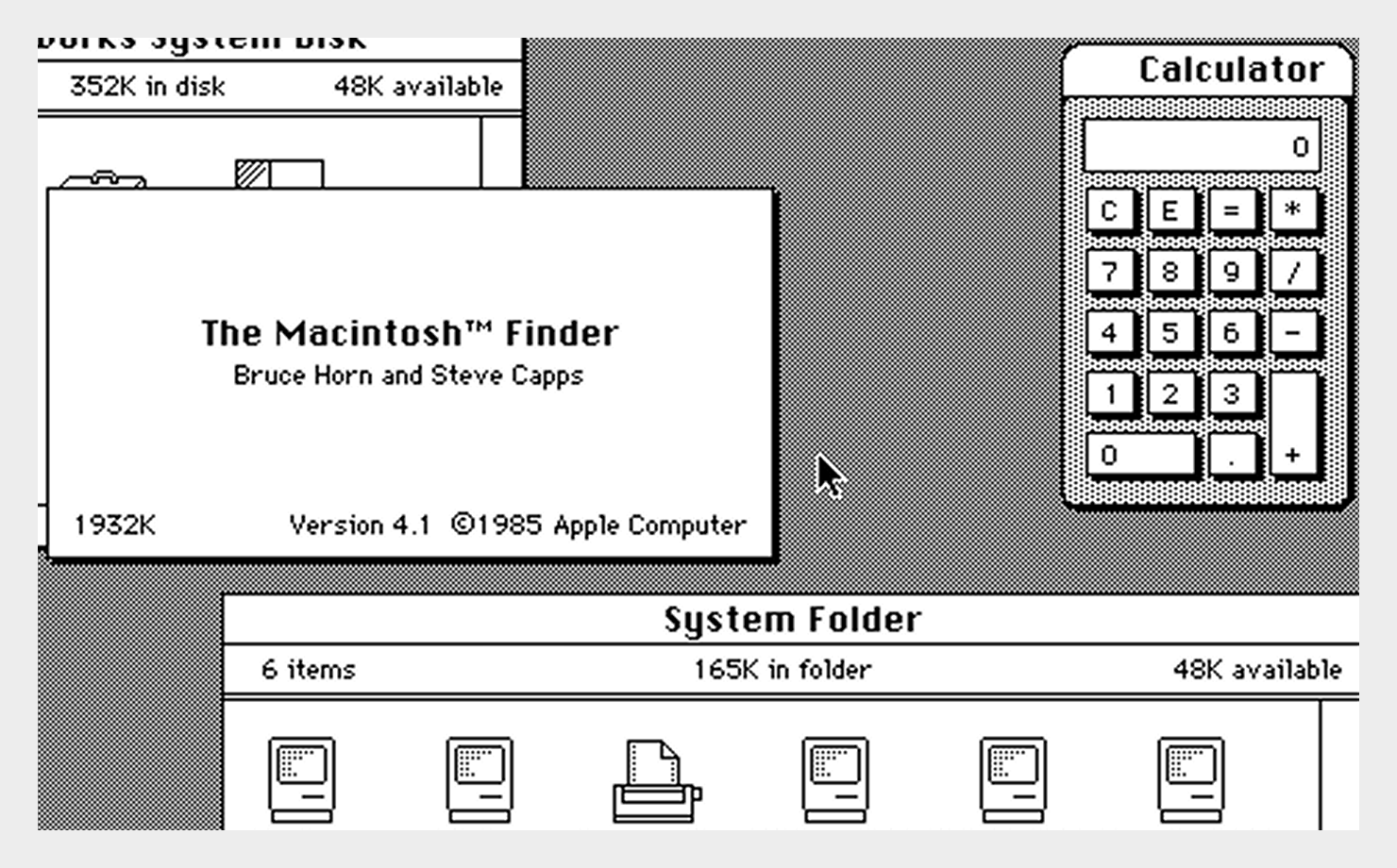
System centric expression - User must express their goals in the systems terms, knowing the commands, sequences, or UI patterns to produce their desired outcome

Human centric expression - System interprets goals expressed in human terms, natural language, multimodal input, and translates them into action
Designing for indeterminacy
This shift introduces a fundamentally different design challenge, where traditional, screen-by-screen approaches are no longer sufficient. In response, I developed the framework below through hands on delivery and research into emerging best practice. Early implementations exposed gaps, particularly where intent was poorly defined or interaction models were mismatched to tasks. Refining these areas proved more impactful than refining UI patterns alone.

Intent
1
Start with the customer’s underlying goal, JTBD research reveals where AI can reduce friction, or fundamentally transform the experience
Human - Model Interaction
2
Match the interaction paradigm to the task at hand. Different AI capabilities require distinct affordances for input, output, and feedback
Experience Principles
3
Use experience principles to anchor quality and consistency in systems where exact outcomes cannot be prescribed
Behavioural Patterns
4
Translate principles into repeatable interaction patterns. Recognisable patterns make AI behaviour predictable, and usable at scale.
First steps
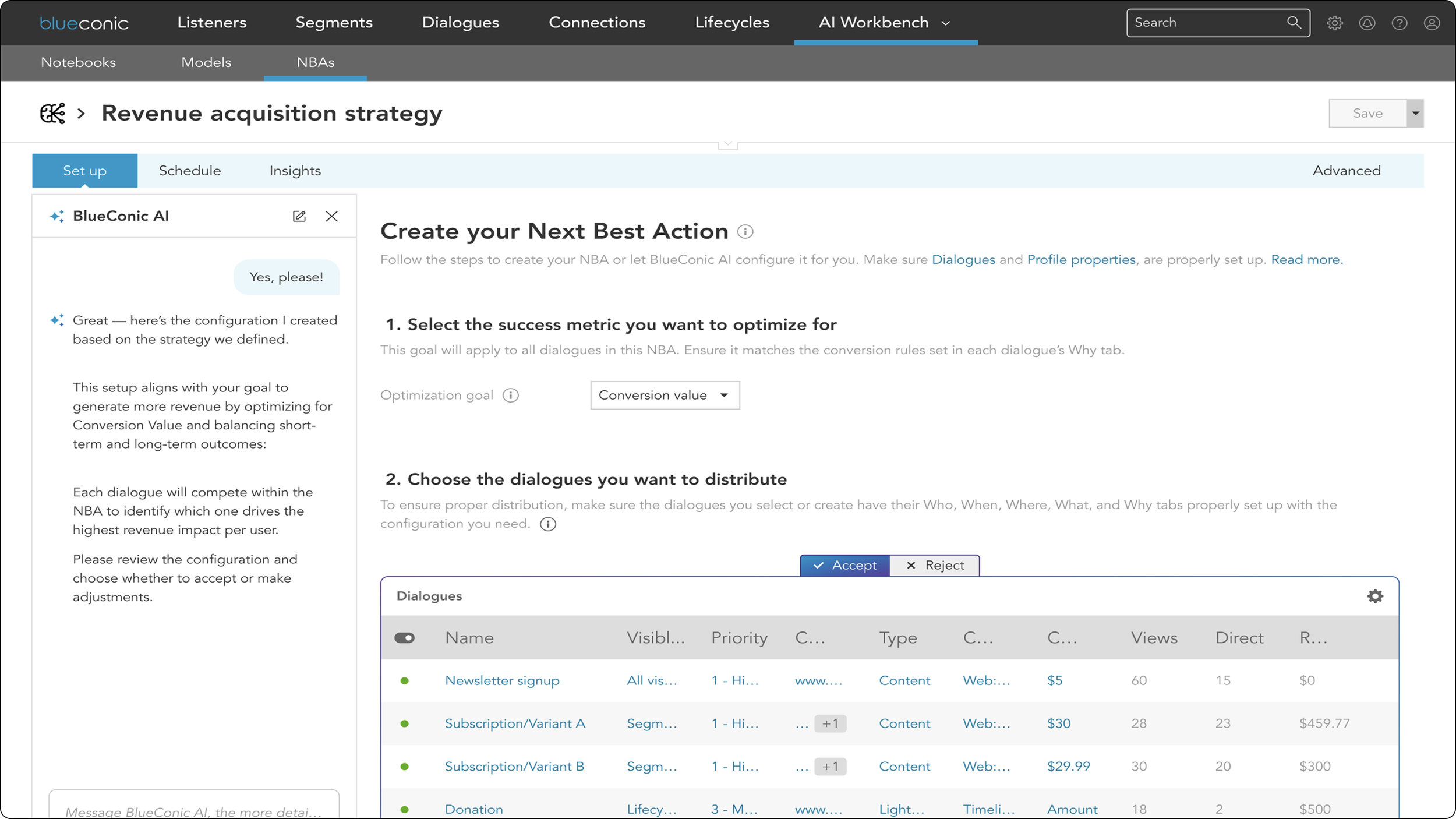
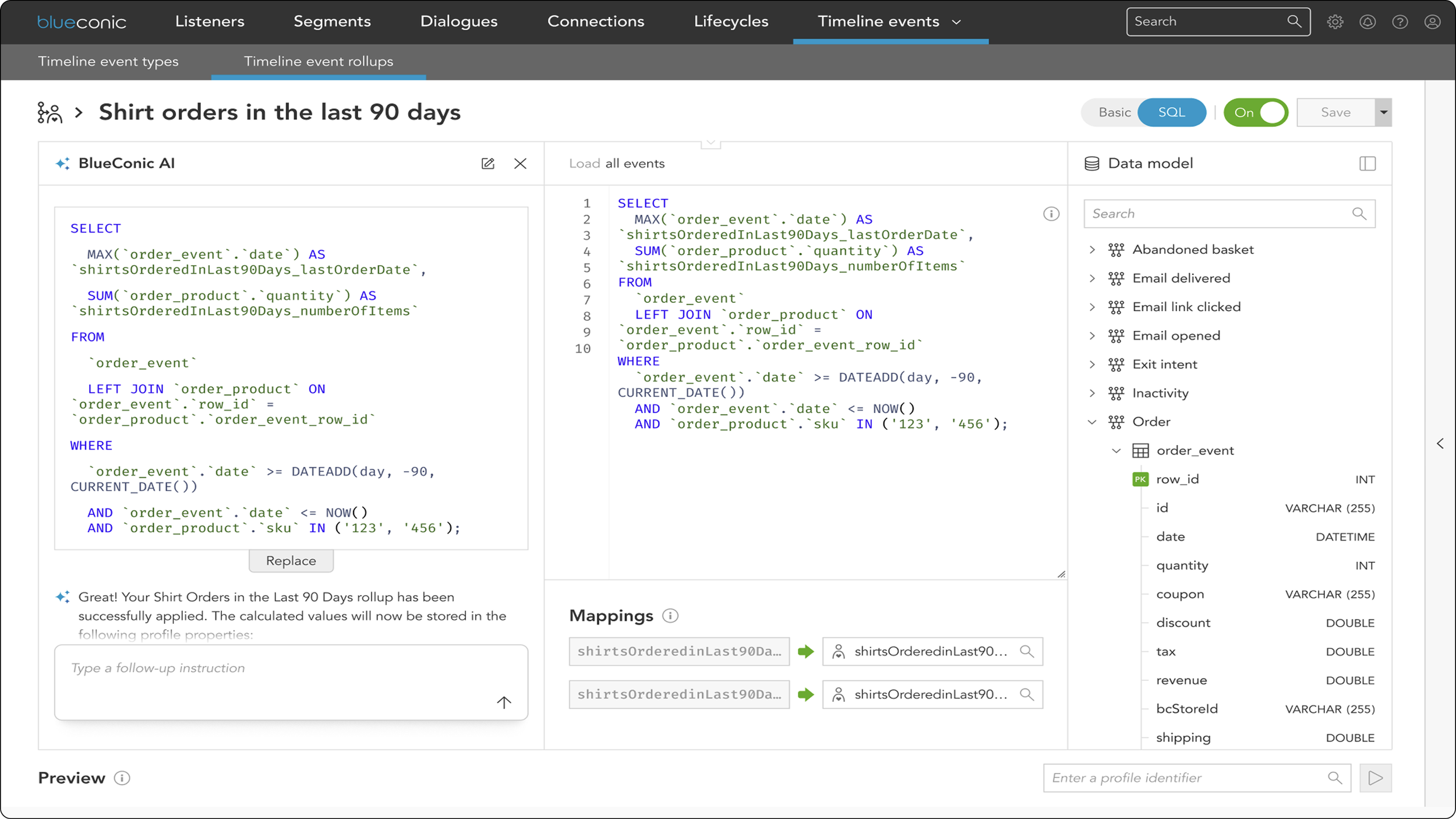
Our initial focus was pragmatic. Rather than reinventing the product, we enhanced existing features with generative AI, including writing SQL and Python, and generating copy, designs, and code for marketing banners.
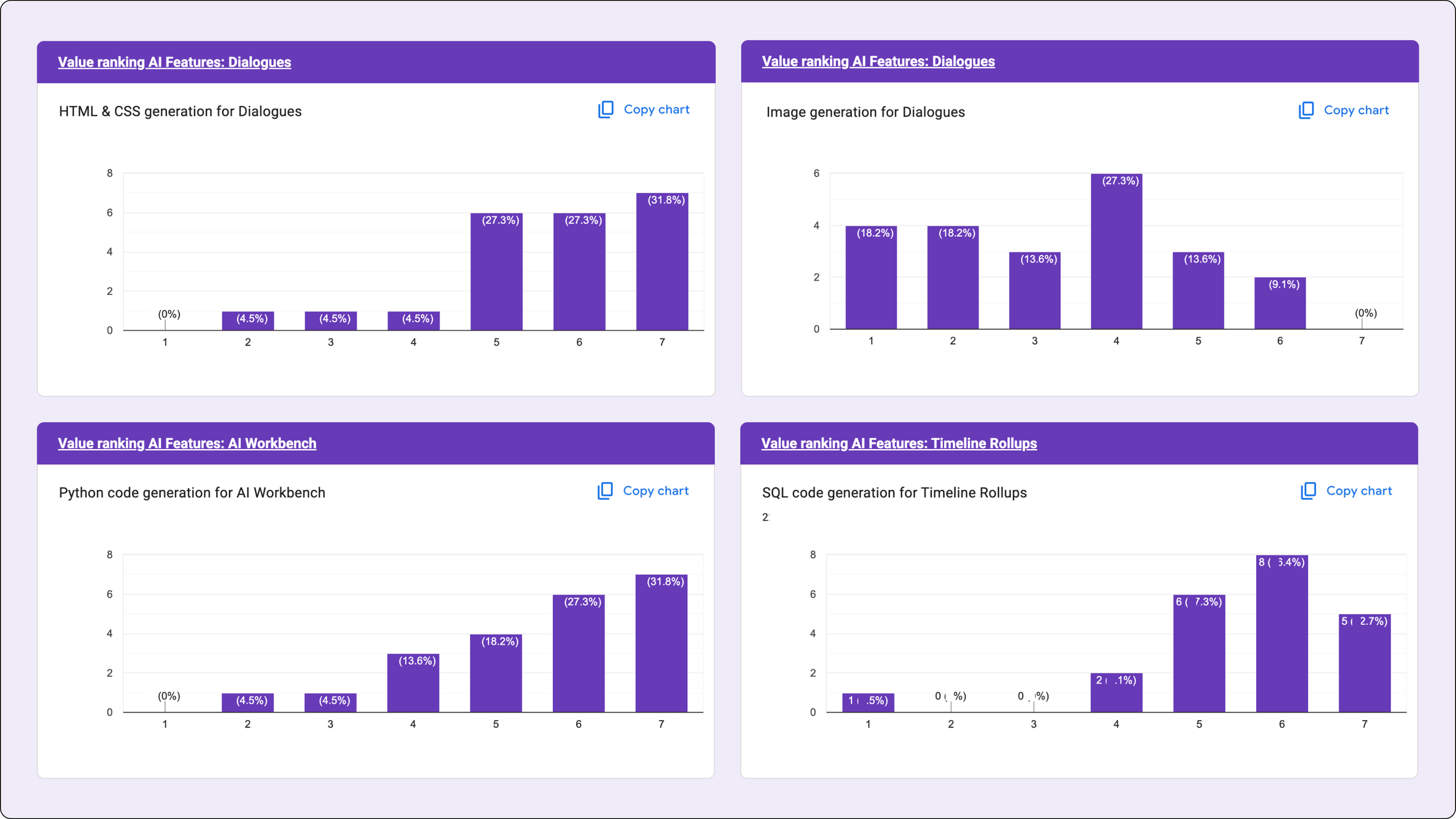
Using analytics and support data, we prioritised high-adoption areas with poor usability, then validated these through customer research to identify where AI could deliver immediate value. While this drove gains, particularly where technical barriers were removed, we were initially ill prepared for how erratic agent behaviour could be.
This made robust experience principles critical, but also highlighted that enforcing them was no longer within the control of design alone. It required close collaboration with engineering to shape prompts and constraints, and with QA to define evaluation criteria and ensure consistent behaviour in practice.
Maturity model
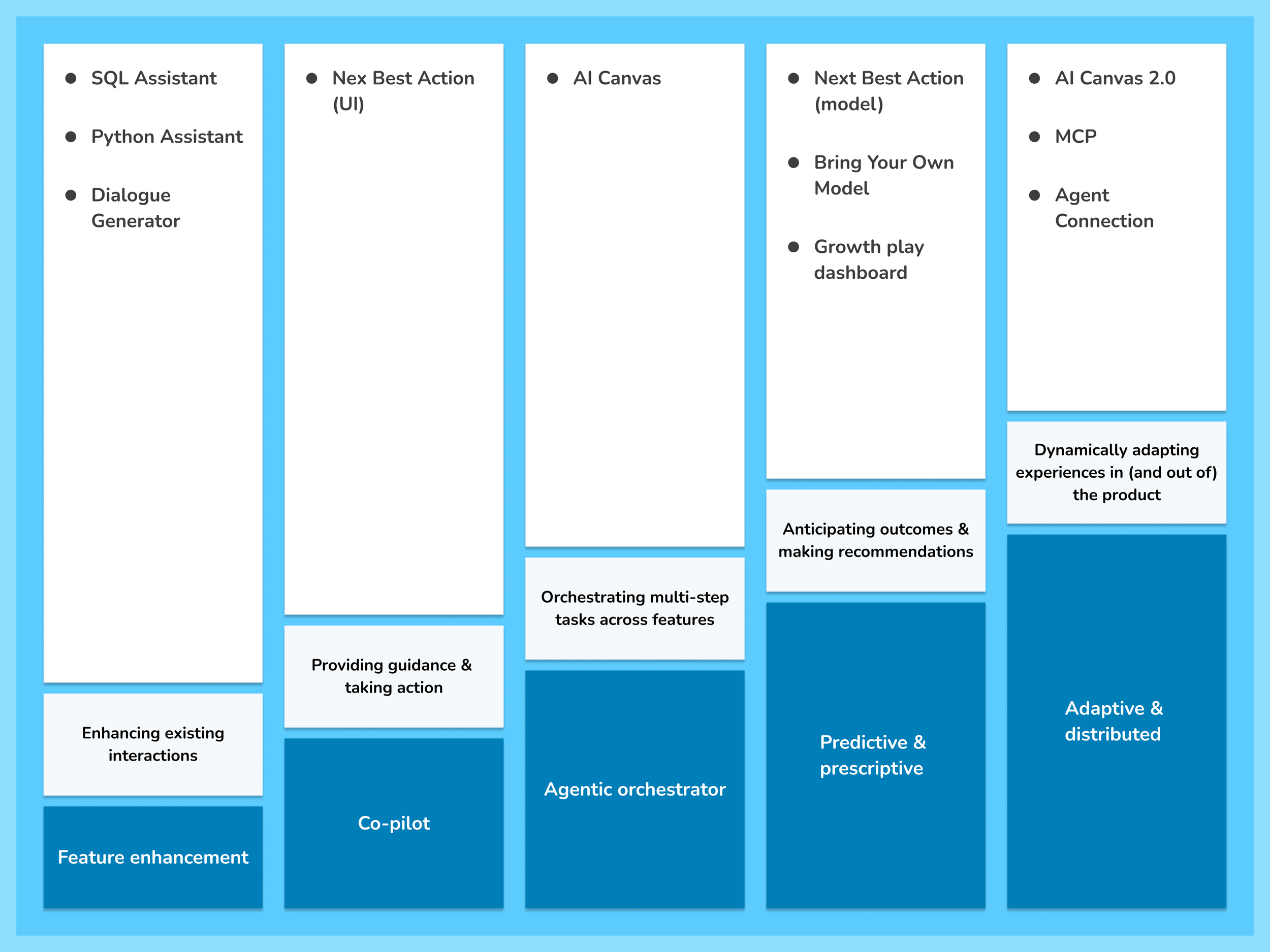
As we moved beyond using AI to improve existing features, I created this maturity model to articulate how AI can be applied, from surface-level enhancements to deeper, more systemic change.
I presented it at a company all hands, after which it was adopted as a shared tool to guide strategic thinking and inform decisions about where and how AI should be deployed to deliver meaningful customer value.
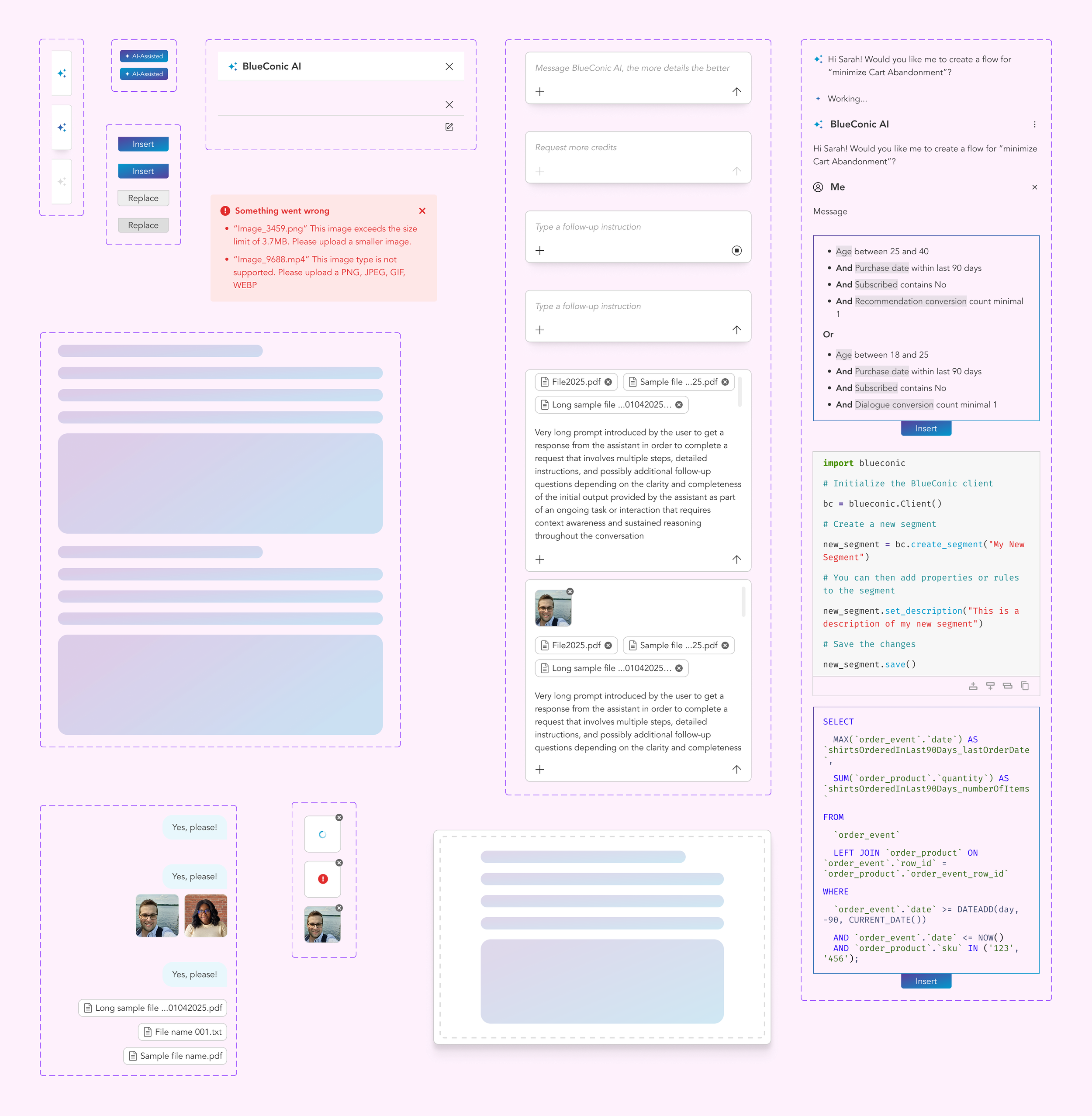
Behavioural patterns
Like most UX teams over the past 18 months, we established a set of behavioural patterns to bring consistency to AI driven experiences, knowing we couldn’t fully control how agents interpret and respond. It was essential to define reliable patterns, guardrails, and fallback mechanisms to handle variability and failure.
We grounded these in familiar patterns from widely used platforms and current best practice to anchor expectations, giving users a stable way to interact even when outcomes could not be explicitly or exhaustively designed.
Raising the bar
Our most ambitious AI capability to date, the AI Canvas, brought together many of the design principles and approaches developed over the past year. It provides a workspace where marketers define a goal (e.g. increasing customer loyalty), and an agent proposes a strategy, maps the required steps, and guides setup.
In the MVP, execution remains largely manual through existing UI, but over time the agent will take on more of this work, automating key steps and generating context-specific UI only where user input is required.
By shifting the user’s role from configuring each step to defining intent and validating outcomes, this moves beyond feature-level AI and changes how users plan and execute work within the product.
Force multipliers
Alongside the product work, we rethought how the design team operated. With strong executive support, we adopted a culture of rapid experimentation with AI, guided by a simple principle: give it a try, keep what works.
Tools such as Fathom and NotebookLM accelerated research, while Cursor and Figma MCP supported rapid prototyping and production quality outputs. More important than the tools themselves was the shift in behaviour. We codified emerging practices, shared knowledge across the team, and built confidence in using AI to augment core design activities.
This enabled the team to move faster, explore more options, and focus more time on higher value problems.

Research & discovery

Market research
Research planning
Persona simulation
Auto transcription
JTBD Analysis
Use case mapping
Report writing
Interactive data querying
Ideation & vibe coding

Ideation
Interactive prototypes
Animation
Micro interactions
Responsive behaviour
Production code (Figma MCP + Cursor)
Design auditing

Layout analysis
Best practice guidance
Accessibility compliance
Product analysis

Session recording summaries & analysis
Agent usage summaries
Natural language analytics
Final thoughts
AI is here to stay, and it will continue to disrupt how we work and live. That much is undisputed. What has become clear to me over the past 18 months is that AI itself will not remain a differentiator for long. Model capabilities are converging, access is becoming ubiquitous, and AI is already, or soon will be, a commodity.
Success will therefore depend less on the technology and more on how effectively organisations reorganise around it, changing processes, practices, and ways of working to use AI as a force multiplier. The real differentiators will be people, process, creativity, and the ability to iterate quickly, learn from feedback, and pivot as customer needs and value fit evolves.
This is where UX has its greatest impact: shaping focus, aligning teams, and ensuring AI is applied to the right problems, at the right level, for the right users.